Yesterday, WR Grace was acquitted on all counts.
Why?
Prosecutorial misconduct. The Rove Racket failed again.
The Washington Post writes today, "The defense accused the government of failing to turn over evidence that would have undermined the credibility of a key prosecution witness. At issue were e-mails between the witness and members of the prosecution team. In court papers, the Justice Department called its lapse 'inexcusable.'"
Of course the U.S. Attorneys Office in Montana had no comment after losing their case.
(See our post below for more background).
Saturday, May 9, 2009
Thursday, May 7, 2009
More Prosecutorial Misconduct by U.S. Attorneys

The WR Grace trial is a beauty. The Rove Racket went after this company for environmental crimes in regards to an asbestos mine owned by WR Grace in Libby, Montana. The mine closed in 1990.
Although environmental pollution is a horrible thing, what is worse is the prosecutorial misconduct in this trial by Assistant U.S. Attorney Kris McLean (the man on the far right of the photo, copyright Associated Press).
McLean intentionally withheld email evidence from the defense. The email evidence was an exchange with the government's supposedly star witness. Sounds similar to the prosecutorial misconduct in the Ted Stevens case.
The AP writes this morning:
McLean opened with an apology for earlier failing to give defense lawyers copies of e-mails relevant in the defense of Robert Bettachi, one of the former executives. "That was my mistake," McLean said. "My mistake caused an interruption in this trial." U.S. District Judge Donald Molloy had told jurors not to consider the testimony of Robert Locke, a key prosecution witness involved in the e-mail communications, when considering the charges against Bettachi. The judge told jurors Wednesday to regard Locke's testimony cautiously when weighing the cases of other defendants. Molloy has broadly criticized the prosecution, at one point telling federal attorneys they did not understand the evidence they were presenting. Last week he dismissed charges against two former executives, shrinking the number still on trial to three, but he refused to end the trial on grounds of prosecutorial misconduct. Motions to acquit remain pending, and Molloy said Wednesday that he would not rule on them before the jury returns verdicts.
Can you believe the judge told the Rove Racket they didn't understand their OWN evidence?
With a botched trial and prosecutorial misconduct, Molloy should contact U.S. Attorney General Eric Holder's office as soon as the case concludes.
Read more about the WR grace case here and here.

Wednesday, May 6, 2009
Siegelman Case Rises Again

The wrongful conviction of former Alabama Governor Don Siegelman is elevating again, slowly in the news. We expect the spotlight to rise in the forthcoming weeks especially on the heels of a Fifth Circuit Court of Appeals decision on the Paul Minor case.
The MetroWest Daily News of Framingham, Massachusetts has an opinion piece that posted yesterday. Here is an excerpt:
Attorney General Holder must immediately reverse the government's position and ask the court to vacate the convictions of (former Alabama) Gov. Siegelman, and failing all else, President Obama must pardon Gov.
Siegelman to stop a gross miscarriage of justice. Not only that, Congress must, as a first priority, finally enforce the subpoenas that Karl Rove has been thumbing his nose at for over a year, and he must be compelled to testify about his role in politically motivated persecution of Gov. Don Siegelman.
Tuesday, May 5, 2009
An End to Prosecutorial Misconduct?
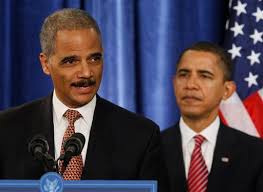
Breaking News: "In his first confab with the nation's chief federal district judges, Attorney General Eric Holder Jr. pledged to raise the bar of professionalism in the U.S. Department of Justice and acknowledged that the current procedure for reviewing complaints against attorneys was too slow and opaque."
Details are emerging this morning about this closed-door meeting held on April 21st.
Holder has encouraged federal judges to contact his office directly to layout details of any occurrences of prosecutorial misconduct during the Rove-Bush Administration.
Law.com reports, "Holder invited the judges to contact him directly about problem prosecutors and other areas of concern. He even gave the crowd his phone number, a symbolic gesture that resonated with many judges who say the department's emphasis on national security, while justified, has put distance between the two branches in recent years."
Read the full law.com article here.
Thursday, April 30, 2009
Tiresome Racket Mouthpiece
The Birmingham News had an editorial yesterday complaining of the repeated and "tiresome"call for justice by former Alabama Governor Don Siegelman who was targeted by the Rove Republican Racket after he left office.
As we reported earlier, 75 former State Attorney Generals have called on Attorney General Eric Holder to review Siegelman's case. The highly critical editorial page of the newspaper notes that none of the 75 are from Alabama (like that really would make a difference) and says that the Siegelman case should not be treated with political favoritism and must go through the regular legal channels.
No offense but having a review, like Holder did for former U.S. Senator Ted Stevens, is part of the regular legal process, espècially when U.S. Attorney Offices act blatantly wrong.
The Birmingham News is a tiresome Rove Racket mouthpiece that did nothing to protect the legal integrity of Alabama's judicial system and has consistently paid political favorites with the Rove Republican Racket.
A political swine flu appears to have infected their brains.
As we reported earlier, 75 former State Attorney Generals have called on Attorney General Eric Holder to review Siegelman's case. The highly critical editorial page of the newspaper notes that none of the 75 are from Alabama (like that really would make a difference) and says that the Siegelman case should not be treated with political favoritism and must go through the regular legal channels.
No offense but having a review, like Holder did for former U.S. Senator Ted Stevens, is part of the regular legal process, espècially when U.S. Attorney Offices act blatantly wrong.
The Birmingham News is a tiresome Rove Racket mouthpiece that did nothing to protect the legal integrity of Alabama's judicial system and has consistently paid political favorites with the Rove Republican Racket.
A political swine flu appears to have infected their brains.

Tuesday, April 28, 2009
Appeals Court Shredding Rove Racket?
In a sudden turn of events in the Paul S. Minor case, the Fifth Circuit U.S. Court of Appeals has sent a letter requesting specific answers to a list of five questions. Reviewing the questions, it appears the court is about to shred the Rove Republican Racket's ridiculous political prosecution theories.
Minor may finally see freedom after being wrongly sentenced to 11 years in prison by the Rove-Bush-Cheney Administration.
The court has asked all parties to file briefs of no more than 15 pages by May 18th. Here is the exact text from their letter dated April 22, 2009:
Minor may finally see freedom after being wrongly sentenced to 11 years in prison by the Rove-Bush-Cheney Administration.
The court has asked all parties to file briefs of no more than 15 pages by May 18th. Here is the exact text from their letter dated April 22, 2009:
The panel requests that the parties provide supplemental briefing on the following issues related to counts 11, 12, 13 and 14 alleging violations of 18 U.S.C. § 666.
The court notes that section 666 provides that an agent of a state or local government or agency receiving federal funds as specified in section 666 – here “the Administrative Office of the Courts” of Mississippi – commits an offense if he “corruptly solicits or demands for the benefit of any person, or accepts or agrees to accept, anything of value from any person, intending to be influenced or rewarded in connection with any business, transaction, or series of transactions of such organization, government, or agency involving any thing of value of $5,000 or more . . . .” Section 666(a)(1)(B) (emphasis added).
Section 666 likewise provides that one commits an offense if he“corruptly gives, offers, or agrees to give anything of value to any person, with intent to influence or reward an agent of an organization or of a State, local or Indian tribal government, or any agency thereof, in connection with any business, transaction, or series of transactions of such organization, government, or agency involving anything of value of $5,000 or more.” Section 666(a)(2) (emphasis added).
1. What evidence shows that the matter or matters respecting which Judge Whitfield or Judge Teel intended to be influenced or rewarded, were a matter or matters in connection with any business or transaction of the Administrative Office of the Courts of Mississippi? Similarly, what evidence shows that anything of value which Minor gave with intent to influence or reward Judge Whitfield or Judge Teel was in respect to any action taken or to be taken in connection with any business or transaction of the Administrative Office of the Courts of Mississippi?
2. Describe the nexus that the “in connection with” clause requires between the relevant governmental agency – here the Administrative Office of the Courts of Mississippi – and the particular matter respecting which the “agent” defendant (here Judge Whitfield or Judge Teel) is intended to be influenced or rewarded.
3. What is the proof of such nexus with respect to the convictions under counts 11, 12, 13 and 14?
4. As to each appellant was a lack of such nexus adequately raised below and on appeal? If not adequately so raised, what authority would allow the court to consider the nexus in the present appeal?
5. If the court determines one or more of counts 11, 12, 13 and 14 should be reversed, what effect, if any, would that have on the proper action to be taken on any of the other counts of conviction, and what effect, if any, would that have with respect to whether there should be resentencing on any of the other counts of conviction even if the convictions on those other counts were not to be reversed?Each party is to provide a brief not to exceed 15 pages, said brief to be filed by May 18, 2009.
Wednesday, April 22, 2009
Seventy-Five
From today's wires:
MONTGOMERY, Ala. (AP) — A bipartisan group of 75 former state attorneys general from across the country has asked U.S. Attorney General Eric Holder to investigate the prosecution of former Alabama Gov. Don Siegelman. They want Holder to conduct an investigation similar to the one that led the Justice Department to drop its case against former Republican Sen. Ted Stevens of Alaska. Holder asked a judge to toss out Stevens' corruption conviction because prosecutors withheld evidence from his defense team during the trial. The attorneys general say in their letter that if similar misconduct is found in the Siegelman case, the once-popular Democrat's corruption conviction should be dismissed. Siegelman was sentenced to more than seven years in prison and is free on bond while he appeals.
Subscribe to:
Posts (Atom)
